Selecting the proper type of respirator equipment plays a vital role in protecting workers from the respiratory hazards present in the workplace. As such, it’s crucial to consider fit testing guidelines before choosing a respiratory protection program to ensure that the equipment will provide workers the best protection against airborne contaminants.
Fit Testing Guidelines
*As per Part 3: Fit-testing procedures of Respiratory protective devices – Selection, use and maintenance, ISO 16975-3: 2017 (E)
“Fit testing is an essential part of an effective RPD programme. All wearers of tight-fitting RPD shall pass an appropriate qualitative fit test (QLFT) or quantitative fit test (QNFT) as described in this document. A fit test shall be performed prior to first use of the RPD and shall be conducted by a competent fit-test operator. Tight-fitting RIs, those that have a face or neck seal (classes bT, cT, and dT as defined in ISO/TS 16973), will not provide optimum performance if they do not fit and therefore need to be fit tested on the individuals who will wear the RPD. All other RIs (classes bL, cL, and dL as defined in ISO/TS 16973) do not require a fit test.”
Swiss Air—Comfort is the new Safety
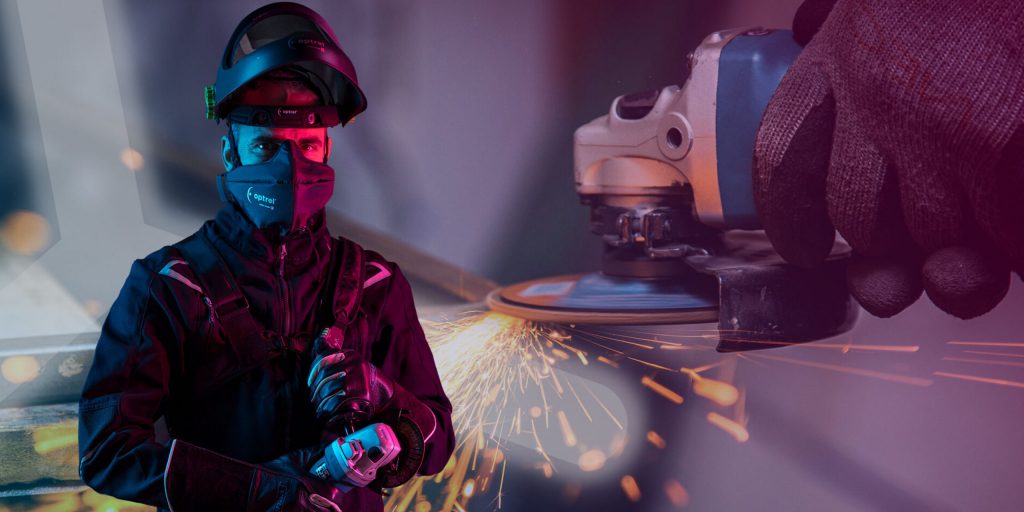
Swiss Air meets the highest requirements for professional respiratory protection systems. Equipped with the TH3 standard: 99.8% of all harmful particles, aerosols, vapors, smoke, or even viruses are reliably filtered out of the breathing air.
The European standard TH3 is equivalent to the P3 classification in Australia. As per AS/NZS 1715, Class P3 particulate filters are used for protection against highly toxic or highly irritant particulates such as beryllium (when worn with a full facepiece).
Since Swiss Air is not classified under the tight-fitting respiratory interface classes (those that have a face or neck seal), it does not require a fit test, as per ISO 16875-3:2017 (E) standards for the selection, use, and maintenance of respiratory protection devices.